-
Books
- Dentistry Books
- Medicine Books
-
Veterinary Books
-
Companion Animals
- Anaesthesia/Analgesia
- Anatomy
- Cytology/Laboratorial
- Veterinary Dentistry
- Diagnostic imaging
- Emergency
- Endocrinology/ Reproduction
- Equine
- Ethology
- Infectious diseases and immunology
- Nephrology/Urology
- Surgery and traumatology/Orthopaedics
- Nutrition
- Rehabilitation
- Parasites
- Ophthalmology
- Oncology
- Endocrinology
- Dermatology
- Cardiology
- Pet owner educational atlas
- Senior care
- Surgery
- Management
- Livestock
- Management
-
Companion Animals
- Webinars
- Edra Class
-
Spanish Books
- Medicina
- Odontología
-
Veterinaria
-
Animales de compañía
- Anatomía
- Anestesiología / Analgesia
- Cardiología
- Citología
- Odontología
- Dermatología
- Diagnóstico por imagen
- Emergencia
- Endocrinología
- Equina
- Etología
- Exóticos
- Asuntos Generales
- Geriatría
- Enfermedades infecciosas & inmunología
- Medicina Interna
- Administración
- Nefrología
- Neurología
- Nutrición
- Oncología
- Oftalmología
- Parasitología
- Fisioterapia
- Cirugía
- Traumatología y ortopedia
- Ganado
-
Animales de compañía
-
Books
- Dentistry Books
- Medicine Books
-
Veterinary Books
-
Companion Animals
- Anaesthesia/Analgesia
- Anatomy
- Cytology/Laboratorial
- Veterinary Dentistry
- Diagnostic imaging
- Emergency
- Endocrinology/ Reproduction
- Equine
- Ethology
- Infectious diseases and immunology
- Nephrology/Urology
- Surgery and traumatology/Orthopaedics
- Nutrition
- Rehabilitation
- Parasites
- Ophthalmology
- Oncology
- Endocrinology
- Dermatology
- Cardiology
- Pet owner educational atlas
- Senior care
- Surgery
- Management
- Livestock
- Management
-
Companion Animals
- Webinars
- Edra Class
-
Spanish Books
- Medicina
- Odontología
-
Veterinaria
-
Animales de compañía
- Anatomía
- Anestesiología / Analgesia
- Cardiología
- Citología
- Odontología
- Dermatología
- Diagnóstico por imagen
- Emergencia
- Endocrinología
- Equina
- Etología
- Exóticos
- Asuntos Generales
- Geriatría
- Enfermedades infecciosas & inmunología
- Medicina Interna
- Administración
- Nefrología
- Neurología
- Nutrición
- Oncología
- Oftalmología
- Parasitología
- Fisioterapia
- Cirugía
- Traumatología y ortopedia
- Ganado
-
Animales de compañía
Active filters
- Author: Angelo Cardarelli
- Author: Graziana Baraghini
- Author: Rafael
- Author: Rafael Astorga
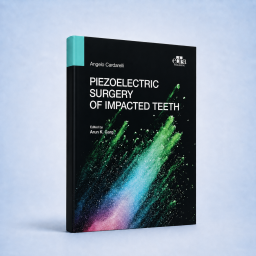
Piezoelectric surgery of impacted teeth
The extraction of impacted dental elements is often referred to by maxillofacial surgeons. However, it can be handled as routinely as any other type of extraction. Piezoelectric surgery of impacted teeth, which involves reproducible procedures using a step-by-step approach in all types of cases, also allows dentists who approach the extraction of impacted elements less frequently to carefully prepare for the procedure and perform it, thereby minimizing possible post-surgical issues for the patient, such as biological risks. Using the most innovative techniques, including the application of ultrasound in oral surgery and piezoelectric surgery, the author provides an indispensable tool to train and update dentists who intend to perform all types of extractions.
The use of MTA in nonsurgical endodontics
The use of MTA in nonsurgical endodontics: direct pulp capping and treatment of immature apices with the “Apical Barrier Technique”
In the late 90s, Dr. Mahmoud Torabinejad of Loma Linda University, California, developed a new cement named Mineral Trioxide Aggregate which appears to have all of the characteristics requested of the ideal cement to seal pathways of communications between the pulp and the oral cavity (mechanical and carious pulp exposures), and between the root canal system and the periodontium (iatrogenic perforations, open apices, resorbed apices, root-end preparations).
First release 1.1.2023 - Available until 12.31.2023
Digital Endodontics: the use of Cone Beam Computed Tomography (CBCT) in Clinical and Surgical Endodontics
For years, two-dimensional (2D) radiographic examinations, dental panoramic, and periapical radiographs have been used.
The interpretation of a two-dimensional image can be complicated by several factors, including the anatomical area and the overlap of other teeth and surrounding dentoalveolar structures.
These problems can be overcome by using images obtained with small or otherwise limited volumes of Cone Beam Computed Tomography, which provides accurate three-dimensional images of the teeth and surrounding dentoalveolar structures. CBCT gives dentists the advantage of being able to carry out correct diagnoses and, above all, correct treatment plans.
First release 1.1.2023 - Available until 12.31.2023
Endodontic surgery or microsurgical endodontics? - Part II
Sometimes, a nonsurgical root canal procedure is not enough to save a tooth, and endodontic surgery is recommended.
Techniques, materials, and knowledge are essential to make microsurgical endodontics approaches accurate and predictable in treating endodontic lesions.
First release 1.1.2023 - Available until 12.31.2023
Endodontic surgery or microsurgical endodontics? - Part I
Occasionally, a nonsurgical root canal procedure won't be enough to save a tooth, and endodontic surgery will be recommended. Advanced technologies like digital imaging and operating microscopes allow these procedures to be performed quickly, comfortably, and successfully.
First release 1.1.2023 - Available until 12.31.2023
“Next” Endo generation instruments: the use of ProTaper Next
The new ProTaper Next NiTi rotary files represent the latest generation of NiTi rotary files. Thanks to this new tool, we can now more easily achieve the shape of the root canal after preliminary canal enlargement and negotiation of the glide path.
First release 1.1.2023 - Available until 12.31.2023
The endodontic Glide Path. The secret for a safe use of Rotary NiTi Files.
The extraordinary characteristic of super elasticity and strength of the NiTi alloy has made it possible to produce rotary instruments capable of assuring a perfect shaping reproducible with the use of very few instruments, in a short time, without the need for the operator to have the above average manual skills.
First release 1.1.2023 - Available until 12.31.2023
Long, short, or just right? Modern techniques to determine an accurate working length in Endodontics
Successful endodontic treatment depends on completely removing the contents of the root canal system and sealing all communication pathways between the endodontium and periodontium. In other words, the result of endodontic treatment must be the same as obtained with the extraction of a compromised tooth.
First release 1.1.2023 - Available until 12.31.2023
Vacunología en pequeños animales
Vaccines in Small Animals
Correct vaccination of dogs and cats requires consideration of a broad range of clinical situations and vaccination options, and obliges veterinary surgeons to constantly update their knowledge in order to appropriately deal with the challenges that arise in daily clinical practice. Using a thoroughly practical approach, this book takes an in-depth look at vaccines and vaccination to provide veterinary professionals with the information they require to address the many doubts and questions that arise in relation to this topic.
Recorded Webinar - Management of Esthetic zone using immediate implants and GBR
Despite the high success rate, immediate implant placements have been challenged with unfavorable esthetic results because of the high prevalence of mid-facial mucosal recession. With the proposed guideline, potential mucosal changes could be prevented by comprehensive assessment and management. Soft tissue grafts could be used successfully to prevent or correct mid-facial mucosal recession following immediate implant placement, achieving predictable esthetic outcomes.
Prof. Angelo Cardarelli
Trophic jaws rehabilitation using tilted implants: minimally invasive approach
The course is done for general dentists and oral maxillofacial surgeons.
The purpose of this course is to present an alternative technique to normal sinusl lift in the upper jaw and bone graft in the mandible with minimal invasive approach to reduce biological costs, without bone regeneration with immediate loading, immediate aesthetic, and immediate function.